
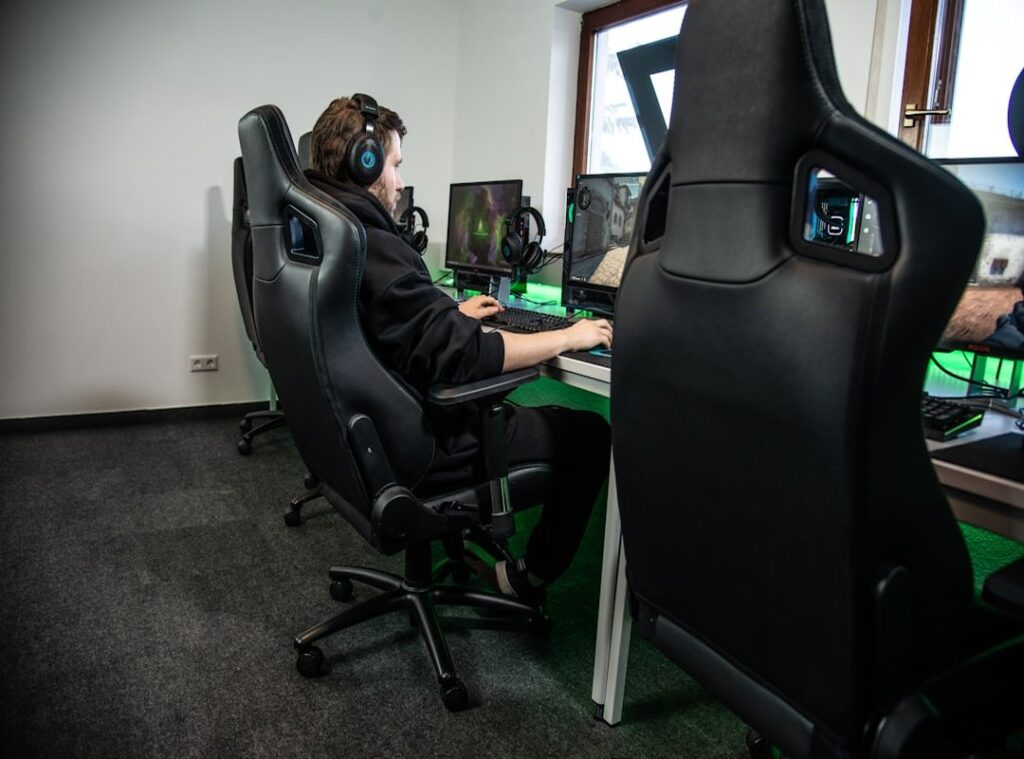
Ever felt that nagging back pain after a marathon gaming session? Or noticed how your focus just drifts away because your chair is more torture device than support system? You’re not alone.
We’ve all been there, hunched over, cursing our furniture. And let’s face it, choosing the perfect gaming chair feels like a minefield with all the flashy ads. But don’t worry.
I’ve clocked thousands of hours testing gear, so you don’t have to. This guide cuts through the nonsense, focusing on what truly boosts your game and comfort. Ready to find your ideal seat?
Let’s get you sitting right.
The Command Center: Building the Perfect Gaming Chair
When it comes to the perfect gaming chair, forget about hunting for a specific model. It’s all about nailing three key pillars: ergonomics, materials, and adjustability. Let’s break it down.
First, ergonomics. Think of it as designing for human comfort and efficiency. It’s the foundation of any decent chair.
Lumbar support and headrests? They’re not just fancy extras. They’re important for your health and long-term gaming stamina.
You want to game for hours without feeling like a crumpled pretzel, right?
Next up, materials. Consider these your chair’s armor. PU leather gives that classic, stylish look.
It’s like the suave class of the chair world. Fabric? Oh, that’s your cozy, breathable choice.
Perfect for those marathon sessions when you don’t want to stick to your seat. And then there’s mesh, the high-airflow, ultra-cool option. It keeps you chill, literally.
Each material has its own vibe, so pick your player class wisely.
Now, adjustability. Think of it as a skill tree you can spec into. Armrests, tilt, recline (these) are your primary skills.
The more adjustment points, the better the fit. It’s like customizing your character in a game. You wouldn’t settle for a generic setup there, so why do it with your chair?
For those looking to boost their setup, check out Pc Gaming Setup Important Gear. It’s a treasure trove of tips.
Pro tip: Don’t skimp on these features. They make all the difference in the world.
Winning the War on Back Pain: Ergonomics Unleashed
Let’s talk about the real enemy in all-night gaming marathons: back pain. It’s the thing you don’t think about until you’re adjusting every five minutes. Ergonomics isn’t just some fancy term.
It’s your ticket to playing longer and staying sharp.
Ever wonder why your lower back cries for help during intense games? Changing lumbar support is your answer. It’s not just a pillow stuffed behind you. It’s adjustable support built right into the chair.
It conforms to your back’s unique shape. the magic happens. It prevents fatigue when you’re on the edge of your seat (literally) during tense moments. Without it, you’re just setting yourself up for discomfort.
Now, let’s not forget the headrest. You’d think a pillow is just a pillow, right? Wrong.
The perfect headrest aligns with your spine’s natural curve. It cradles your neck, reducing strain when you’re fixated on the screen. It’s like the difference between sleeping in a luxury bed and crashing on a couch.
Trust me, your neck will thank you.
And then there’s the ‘waterfall’ seat edge. Sounds fancy but it’s just a rounded seat edge. This feature is a game-changer for blood circulation.
Keeps your legs from going numb after hours of sitting. It’s the little things that make the perfect gaming chair.
Seat depth and width might seem trivial. They’re not. You don’t want to feel cramped (or like a kid in a giant’s chair).
Measuring it right ensures comfort tailored to your body type. Let’s be honest, the wrong fit can ruin a session.
For a deep dive into options, check out the best gaming chairs. You’ll find a range of setups for every gamer. Got it?
Good. Now go make your back happy.
Level Up Your Loadout: Must-Have vs. Nice-to-Have Features
So, you’re on the hunt for the perfect gaming chair. I get it. I’ve been there myself, sifting through countless models trying to separate the essentials from the fluff.
It’s like trying to pick a favorite game. Nearly impossible. Let’s break it down.
First up, the must-haves. The core gear, if you will. 4D armrests. Ever heard of them?
They’re not just a fancy term. These things move up and down, forward and back, side-to-side, and they rotate. They support your arms during those marathon sessions, reducing shoulder strain.
Trust me, your body will thank you. Then there’s the solid recline and tilt lock. You want a chair that can recline between 90-150 degrees.
Why? Because finding that sweet spot between stability and relaxation is key. Ever tried gaming while slouched?
It’s not pretty.
Now, onto the nice-to-haves. The god-tier loot of the chair world. Integrated footrests.
They’re a dream for console gamers or anyone who likes to kick back between matches. I mean, who doesn’t love a good lounge after a tough round? And then there are high-quality caster wheels.
Sure, they might not be glamorous, but they protect your floors and give you that smooth glide. Imagine rolling to your setup with ease. It’s all about the details.
Last but not least, premium build materials. Steel frames and high-density cold-cured foam aren’t just buzzwords. They scream durability.
Your chair should last through countless gaming battles, not unlike how keyboard customization enhancing gaming responsiveness can level up your play.
So, what do you really need? Decide what’s important for your gaming throne and what’s just nice to have. Your budget, your call.
Just don’t skimp where it counts.
Sizing It Up: Matching Chairs to Bodies and Budgets
Finding the perfect gaming chair is like matchmaking for comfort. If you’re over 6 feet tall, don’t settle for a chair that leaves you hunched over like Quasimodo. Look for chairs with a high backrest.
Got a heavier build? Check the weight capacity and go for a steel frame. Sturdy materials make a world of difference when it comes to longevity and support.
Now, let’s talk money. Your budget will steer your choices, and that’s okay. Entry-level chairs ($150-$300) might look the part, but they aren’t going to win any awards in the comfort department.
They offer the basics, sure, but don’t expect them to hold up for years. Mid-range ($300-$550) is where most gamers find their sweet spot. Here, you get quality materials, ergonomic features, and decent adjustability (all without breaking the bank).
For the pros out there, shelling out $550+ gets you luxury. Think premium materials, top-notch ergonomic designs, and warranties that match your commitment to marathon gaming sessions. These are the chairs for those who clock serious hours in front of the screen.
So what’s your move?
Rule Your Gaming Empire
You’ve got everything you need to find your perfect gaming chair. No more backaches or wasted hours in frustration. It’s simple: match the chair’s ergonomics, materials, and features to what you need.
A great chair isn’t just furniture; it’s your performance gear. Ready to level up your setup? Now that your throne is sorted, dive into our guide to building the ultimate gaming desk setup.
Why wait? Grab control and conquer your gaming world. Check out thehaketech.net for more on gaming strategies and tech takeaways.
Your perfect gaming area awaits. Time to claim it!
 Robertiven Nakamuras is the kind of writer who genuinely cannot publish something without checking it twice. Maybe three times. They came to hake-level modding tutorials through years of hands-on work rather than theory, which means the things they writes about — Hake-Level Modding Tutorials, Pro Perspectives, Tech-Powered Game Strategy Guides, among other areas — are things they has actually tested, questioned, and revised opinions on more than once.
That shows in the work. Robertiven's pieces tend to go a level deeper than most. Not in a way that becomes unreadable, but in a way that makes you realize you'd been missing something important. They has a habit of finding the detail that everybody else glosses over and making it the center of the story — which sounds simple, but takes a rare combination of curiosity and patience to pull off consistently. The writing never feels rushed. It feels like someone who sat with the subject long enough to actually understand it.
Outside of specific topics, what Robertiven cares about most is whether the reader walks away with something useful. Not impressed. Not entertained. Useful. That's a harder bar to clear than it sounds, and they clears it more often than not — which is why readers tend to remember Robertiven's articles long after they've forgotten the headline.
Robertiven Nakamuras is the kind of writer who genuinely cannot publish something without checking it twice. Maybe three times. They came to hake-level modding tutorials through years of hands-on work rather than theory, which means the things they writes about — Hake-Level Modding Tutorials, Pro Perspectives, Tech-Powered Game Strategy Guides, among other areas — are things they has actually tested, questioned, and revised opinions on more than once.
That shows in the work. Robertiven's pieces tend to go a level deeper than most. Not in a way that becomes unreadable, but in a way that makes you realize you'd been missing something important. They has a habit of finding the detail that everybody else glosses over and making it the center of the story — which sounds simple, but takes a rare combination of curiosity and patience to pull off consistently. The writing never feels rushed. It feels like someone who sat with the subject long enough to actually understand it.
Outside of specific topics, what Robertiven cares about most is whether the reader walks away with something useful. Not impressed. Not entertained. Useful. That's a harder bar to clear than it sounds, and they clears it more often than not — which is why readers tend to remember Robertiven's articles long after they've forgotten the headline.