
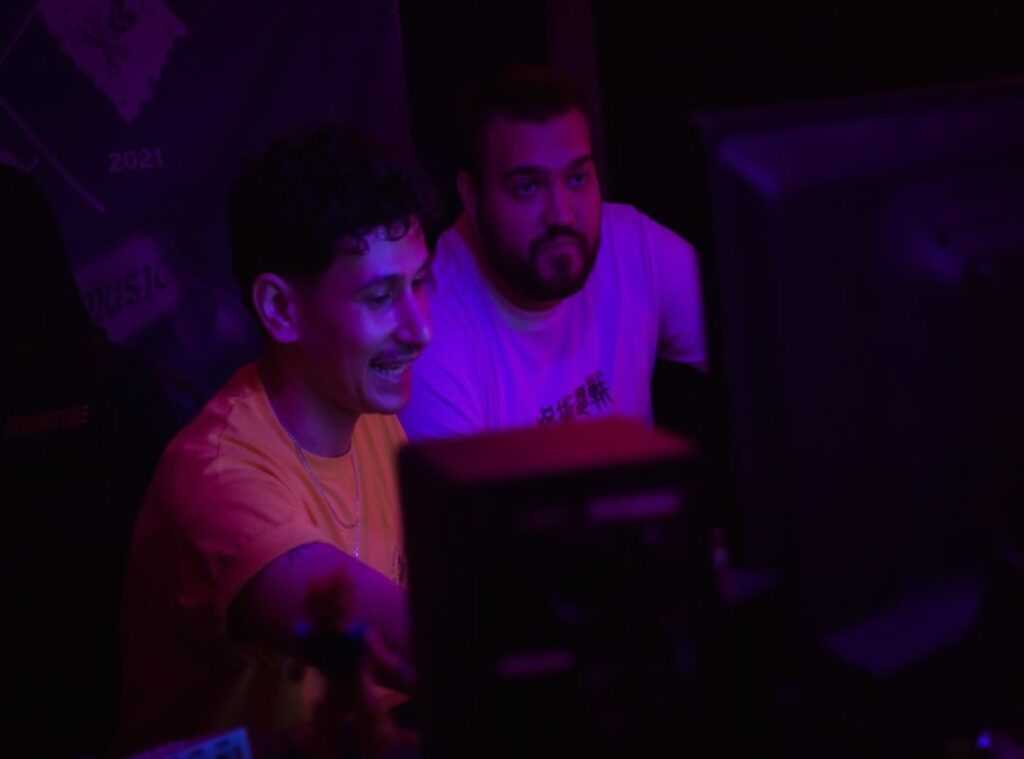
Lag. The bane of every gamer’s existence. You’re on the brink of victory, adrenaline pumping, and then it hits.
A soul-crushing freeze. Match lost. Ever wonder why your online multiplayer connection behaves like a mischievous sprite?
I’ve spent years not just playing but digging into the very tech that fuels these games. And let me tell you, there’s more to it than just pressing buttons. It’s like trying to solve a puzzle with invisible pieces.
But don’t worry, I’m here to break down the enigma without drowning you in tech jargon.
You’ll finally understand what’s happening behind the scenes of your favorite games. You won’t need to be a computer scientist to get it. Ready to take control of your gaming destiny?
Let’s dive in and explore it all.
Digital Multiplayer Networks: Your Game’s Secret Postal Service
Ever wonder how your online multiplayer connection really works? It’s like a super-fast postal service for your game. Every move you make (every) jump, sprint, and aim (is) a letter sent through this digital system.
These letters? They’re called data packets. They contain your every button press and aim adjustment.
Now, let’s break it down. There are two core players in this system: the ‘Client’ and the ‘Server.’ The Client? That’s your PC or console.
It handles your commands. The Server is the game’s brain. Another player’s machine or a central computer.
It processes those commands and delivers the results back to you.
But here’s where it gets real. The speed and reliability of this digital postal service can be the difference between a smooth victory and a lag-filled defeat. Ever played Call of Duty?
Every bullet fired is a data packet zooming through the network. The network’s response determines if that bullet finds its mark. It’s make-or-break time in milliseconds.
I’ve found that in games, this connection is everything. Without it, your game could turn into a frustrating mess. But if you want to dive deeper into strategies, you might find our ultimate MMO raiding plan helpful.
It’s amazing how much hinges on this invisible network. So next time you’re gaming, remember. Your moves are just tiny letters, sprinting across the internet.
The Main Event: Client-Server vs. Peer-to-Peer
When diving into online multiplayer connections, you’re faced with a big choice: client-server or peer-to-peer (P2P). This decision shapes your entire gaming experience. Let’s break it down and see why this choice is no small matter.
First up, The Fortress: Client-Server Model. Imagine a central hub, a mighty referee that keeps order. That’s the client-server model for you.
It’s all about one solid server that everyone connects to. Why do big names like Fortnite, Valorant, and World of Warcraft use it? Well, it’s all about keeping things fair.
No cheating. It keeps competitive integrity intact.
Pros? Better security, less chance of cheating, and stability even with thousands of players. But it’s not all sunshine.
Now, let’s talk about The Wild West: Peer-to-Peer (P2P) Model. It’s a bit more… free-spirited. Players connect directly to each other.
It can be expensive for developers and there’s that dreaded single point of failure. If the server goes down, everyone’s out. Still, for games that can’t afford chaos, it’s a must.
One player’s console usually acts as the host. You’ve probably seen this in action in fighting games like Street Fighter or co-op games like Elden Ring’s multiplayer. Why use P2P?
It’s great for smaller player groups and can mean lower latency in 1v1 matchups.
But, there’s a catch. It’s less secure. You have a ‘host advantage’ where the host might get a slight edge.
And if the host bails, everyone else is left hanging. Yet, for games that are more about quick, casual play, P2P shines. It’s cheaper for developers too, so more games use it when they can.
So which should you choose? If you’re into large-scale battles with top-notch security, the client-server model is your go-to. But if you’re all about fast-paced matches and don’t mind a little unpredictability, P2P might just win your heart.
Want more on multiplayer gaming? Check out this resource for a deeper dive.
Decoding the Holy Trinity: Ping, Latency & Lag
Ever felt like you’re yelling “hello” in a canyon and waiting for that echo? That’s your ping. In the gaming world, ping is the round-trip time it takes for your data to hit the server and bounce back, measured in milliseconds.

Lower ping? Your actions hit the screen faster, which is gold in any online multiplayer connection.
Now, latency. It’s often tangled up with ping, but they’re not the same. Latency is the delay before a transfer of data begins following an instruction.
Think of it as the time you wait after clicking the mouse before your action registers (milliseconds matter here). And low ping? Yeah, that’s king.
It means your commands register quicker, giving you an edge (and probably more wins too).
But what about lag? Lag’s that pesky, infuriating stutter or character teleportation you face. It’s not a number but a symptom of high latency or, worse, packet loss.
Imagine sending a bunch of letters and some get lost on their way (that’s) packet loss. Your character starts rubber-banding, missing shots, or glitching through walls because the server’s missing parts of your “hello.”
Curious about leveling up your skills? Check out Mastering Fps Aiming Tips Tools for more tricks.
Pro tip: Always test your connection before jumping into a match. It’s like checking your gear before a hike (you) just don’t skip it. In the end, understanding these terms isn’t just jargon.
It’s knowing your game and owning it. So next time your game lags, you’ll know exactly what’s up.
Your Network Quest: How to Slay the Lag Dragon
Gaming with a bad connection is like trying to run a marathon with one shoe. Frustrating, right? to how you can boost your online multiplayer connection and put an end to the dreaded lag.
First, let’s talk about the Wired Covenant. You might think Wi-Fi is convenient, but it’s the sneaky villain in your gaming story. Switch to an Ethernet cable.
It’s like upgrading from a donkey to a racehorse. The difference is mind-blowing.
Next, geographic awareness. Ever chosen a game server on the other side of the world because it sounded cool? Don’t.
Pick the one closest to you. Your ping will thank you.
Now, about those bandwidth hogs. Are you guilty of downloading the latest blockbuster while gaming? Pause it.
Save your precious bandwidth for the game. It’s like clearing rush hour traffic for a smooth ride.
Finally, the simple reset. Your router is not invincible. Turn it off and on again.
Seriously, it works wonders. It’s the magic trick every tech guru knows.
So, ready to slay that lag dragon? Armed with these tips, you’ll be gaming like a pro in no time. Let the quest begin!
Level Up Your Game Network Skills
You get it now. The online multiplayer connection isn’t a black box anymore. Lag?
It’s the ultimate fun-killer, but it’s not unbeatable. You’ve learned the difference between server types. You know what “ping” really means.
This knowledge is your weapon.
Why let lag ruin your game? Use this understanding to improve your setup. Dive into your settings.
Tweak those connections. You’ve got the power to change your game.
Now, go use this knowledge. May your pings be low and your victories many. It’s your move.
Make it count.
 Robertiven Nakamuras is the kind of writer who genuinely cannot publish something without checking it twice. Maybe three times. They came to hake-level modding tutorials through years of hands-on work rather than theory, which means the things they writes about — Hake-Level Modding Tutorials, Pro Perspectives, Tech-Powered Game Strategy Guides, among other areas — are things they has actually tested, questioned, and revised opinions on more than once.
That shows in the work. Robertiven's pieces tend to go a level deeper than most. Not in a way that becomes unreadable, but in a way that makes you realize you'd been missing something important. They has a habit of finding the detail that everybody else glosses over and making it the center of the story — which sounds simple, but takes a rare combination of curiosity and patience to pull off consistently. The writing never feels rushed. It feels like someone who sat with the subject long enough to actually understand it.
Outside of specific topics, what Robertiven cares about most is whether the reader walks away with something useful. Not impressed. Not entertained. Useful. That's a harder bar to clear than it sounds, and they clears it more often than not — which is why readers tend to remember Robertiven's articles long after they've forgotten the headline.
Robertiven Nakamuras is the kind of writer who genuinely cannot publish something without checking it twice. Maybe three times. They came to hake-level modding tutorials through years of hands-on work rather than theory, which means the things they writes about — Hake-Level Modding Tutorials, Pro Perspectives, Tech-Powered Game Strategy Guides, among other areas — are things they has actually tested, questioned, and revised opinions on more than once.
That shows in the work. Robertiven's pieces tend to go a level deeper than most. Not in a way that becomes unreadable, but in a way that makes you realize you'd been missing something important. They has a habit of finding the detail that everybody else glosses over and making it the center of the story — which sounds simple, but takes a rare combination of curiosity and patience to pull off consistently. The writing never feels rushed. It feels like someone who sat with the subject long enough to actually understand it.
Outside of specific topics, what Robertiven cares about most is whether the reader walks away with something useful. Not impressed. Not entertained. Useful. That's a harder bar to clear than it sounds, and they clears it more often than not — which is why readers tend to remember Robertiven's articles long after they've forgotten the headline.