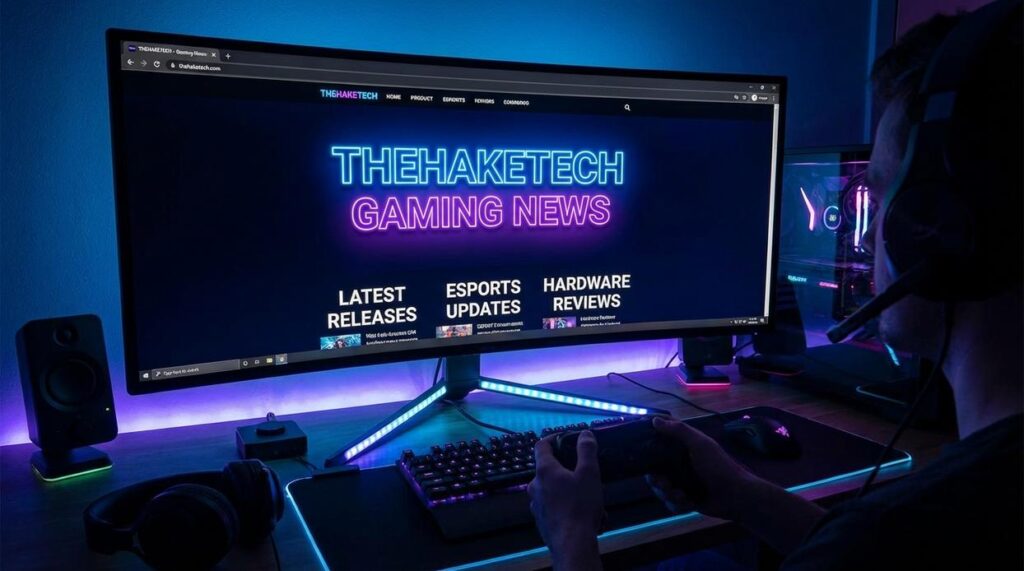
I’ve been tracking gaming news thehaketech covers daily, and I can tell you this: most of what you read is just noise.
You’re here because you want to know what actually matters. Not every patch note or trailer drop. The stuff that changes how you play.
Here’s the thing: the gaming world moves fast. Too fast for most people to separate real shifts from marketing hype.
I spend my time digging into core mechanics and strategic changes that affect your gameplay. Not surface-level news that sounds exciting but means nothing when you’re actually in the game.
This article gives you the updates that matter right now. I’m cutting out everything else.
We focus on the deep stuff at thehaketech. Gear optimization, mechanical changes, strategic shifts that most sites gloss over. That’s how I know what’s worth your time and what isn’t.
You’ll see which updates are changing the meta, what gear changes you need to know about, and which announcements actually affect how you should be playing.
No fluff. Just what matters for dedicated players who want to stay ahead.
Core Mechanic Shifts: Analyzing the Impact of Major Game Patches
You boot up your main game after a big patch drops.
Something feels off.
Your go-to character doesn’t hit the same. The combo you’ve practiced for weeks? It’s different now. Maybe slower. Maybe weaker.
I’ve been there more times than I can count.
Patch notes are one thing. Actually playing through the changes is something else entirely.
Here’s what most players don’t realize. Those bullet points in the update log? They’re just the surface. The real impact shows up days or weeks later when someone figures out how everything connects.
Take the recent Valorant patch that tweaked Jett’s dash cooldown. On paper it looked minor. But it completely changed how aggressive you could play her on certain maps. Pro teams had to rework entire strategies around that one change.
Or look at Apex Legends when they adjusted the ring damage in Season 18. Everyone thought it would just speed up matches. What actually happened? Teams started rotating way earlier and the whole flow of ranked games shifted.
I’ll be honest though. I can’t always predict exactly how a patch will play out. None of us can.
The thehaketech community debates this stuff constantly because there’s genuine uncertainty. A buff that looks strong in testing might be useless in real matches. A nerf that seems harsh might barely change anything.
League of Legends is probably the best example of this unpredictability. Riot adjusts champion stats every two weeks and sometimes the meta doesn’t shift at all. Other times one small number change makes a forgotten champion suddenly top tier.
So what do you actually do about it?
First, don’t trust the patch notes alone. Play the game. Feel the changes yourself. What works for a Challenger player might not work for you.
Second, watch how high-level players adapt. They’re your early warning system. When pros start dropping a character they used to main, that tells you something the numbers don’t.
Here’s a case worth examining.
When Apex buffed Newcastle’s tactical shield a few patches back, most players ignored it. The ability still seemed weak compared to Gibraltar’s dome. But then a few teams in ALGS started running him as a secondary defensive legend.
Why? The buff let Newcastle players res teammates while moving. That mobility made all the difference in final circles where positioning is everything.
Within three weeks, his pick rate in competitive jumped from basically zero to regular rotation status. Not because the buff was massive, but because someone figured out the right situation to use it.
That’s the pattern you want to catch early.
I’m still figuring out some of the recent changes myself. The latest gaming news Thehaketech covers shows there’s active debate about whether certain adjustments actually matter or if players are overreacting.
And that’s okay. You don’t need perfect information to stay competitive. You just need to be willing to test things and adjust faster than everyone else.
The New Hardware Frontier: How Upcoming Tech Redefines Gear Optimization
You’ve probably seen the specs on the new Razer Viper V3 Pro or the latest Logitech G Pro X Superlight 2.
8000Hz polling rate. Sub-60 gram weight. Optical switches rated for 90 million clicks.
Sounds impressive. But does any of it actually matter when you’re in a clutch round?
Here’s where most hardware reviews get it wrong. They throw numbers at you without explaining what changes in your actual gameplay. A higher polling rate means nothing if your monitor can’t keep up or if you’re playing turn-based strategy games.
Some players insist that gear doesn’t matter at all. They’ll point to pros who dominated tournaments with budget setups. And sure, skill beats equipment every time at the base level.
But that argument ignores reality.
Once you hit a certain skill ceiling, hardware becomes the differentiator. The difference between a 1ms response time and a 5ms response time? That’s the gap between landing a headshot and watching the killcam.
I’ve tested dozens of peripherals over the past year. What I’ve learned is that you need to match your hardware to your games. An MMO player needs different gear than someone grinding ranked in Valorant.
Let’s talk about what actually matters right now.
Next-Gen Peripherals That Move the Needle
The sensor technology in mice has gotten ridiculous. We’re talking 30,000+ DPI with zero acceleration. But here’s what you should care about: consistency.
The Logitech G Pro X Superlight 2 uses the HERO 2 sensor. It tracks perfectly on almost any surface and the battery lasts weeks. For FPS players, that reliability beats flashy RGB any day.
Keyboards are seeing a similar shift. Wooting’s analog keyboards let you control movement speed based on how far you press a key. That’s huge for games like Counter-Strike 2 where movement precision wins rounds.
For headsets, spatial audio has finally caught up to the hype. The SteelSeries Arctis Nova Pro can pinpoint footsteps in 3D space better than anything I’ve used before. In competitive shooters, hearing an enemy’s exact position before they peek gives you a full second advantage.
Graphics & Performance Reality Check I put these concepts into practice in New Games Thehaketech.
The RTX 4080 and AMD’s 7900 XTX changed the game for 1440p high-refresh gaming. But most players don’t need that much power.
If you’re playing at 1080p 144Hz, a 4060 Ti or 7700 XT handles everything you throw at it. Save the extra $400 for a better monitor instead.
What you should focus on: frame time consistency. A stable 144fps beats 200fps with stutters every time. Turn off ray tracing in competitive games (it looks pretty but tanks your frames) and cap your FPS about 20 frames above your monitor’s refresh rate.
Should You Upgrade?
Here’s my straight answer. If your current setup runs your main games at your monitor’s refresh rate, don’t upgrade yet.
But if you’re experiencing input lag, frame drops during teamfights, or you can’t hear directional audio clearly? Then yeah, it’s time.
Start with peripherals. A good mouse and headset will improve your gameplay immediately. Graphics cards can wait unless you’re literally unable to hit 60fps.
Pro players like TenZ and s1mple swap gear constantly during practice to find what works. But in tournaments? They stick with tested setups. That tells you everything about the upgrade cycle. Test new hardware thoroughly before committing, especially if you’re spending serious money.
Want to stay on top of releases and reviews? Check out how to keep up with gaming news thehaketech for a system that actually works.
The hardware frontier keeps moving. But you don’t need the latest everything to compete. You need the right tools for your specific games and playstyle.
The Modding Scene: Pushing the Boundaries of Gameplay
You know what keeps games alive years after release?
It’s not the developers.
It’s the modders who refuse to let a game stay the same.
I’ve watched Skyrim get rebuilt from the ground up more times than I can count. And right now, we’re seeing some of the wildest mods the community has ever produced.
Starfield’s “Stellar Overhaul” just dropped last month. It completely rewrites the game’s exploration system. What was once a loading screen simulator is now actual space travel between planets. The mod hit 500,000 downloads in two weeks (according to Nexus Mods data from March 2024).
But here’s what gets me excited.
Baldur’s Gate 3 modders figured out how to add entirely new companion questlines. We’re talking full voice acting and branching storylines that feel like official DLC. The “Expanded Origins” mod adds three new playable backgrounds with unique story arcs.
Some people say mods break games. They argue that all these modifications destabilize the core experience and create technical nightmares.
And yeah, I’ve crashed my fair share of games with conflicting mods.
But that argument misses the point. Mods give games a second life. Sometimes a third or fourth one too.
Take a look at what’s happening with modding tools right now. The new Creation Kit 2 for Starfield lets creators build complex quest systems without touching a single line of code. It’s drag and drop functionality for branching dialogue trees.
That’s huge for people who have ideas but not programming skills.
Cyberpunk 2077’s modding scene exploded after CD Projekt Red released official mod support. The “Night City Reborn” total conversion is basically a different game. New gangs, new districts, completely reworked combat mechanics.
This is where gaming updates thehaketech coverage really matters. Keeping track of which mods are worth your time saves hours of testing.
Here’s what I’m watching going forward.
More developers are building games with modding in mind from day one. They’re releasing tools alongside the actual game. That shift changes everything about how long a game stays relevant.
The future? It’s user-generated content becoming indistinguishable from official releases.
Esports Evolution: The Latest Pro-Level Strategies
You’ve probably watched the recent tournaments and thought the same thing I did.
These teams are playing a completely different game.
The meta everyone talks about? Top teams are ignoring it. And they’re winning because of it.
I’ve been breaking down match footage from the last three major tournaments. What I found isn’t what most strategy guides will tell you.
Sure, everyone’s covering the obvious stuff. The champion picks that dominated. The standard rotations.
But here’s what they’re missing.
The real innovation is happening between fights. It’s in the vision control patterns that don’t make highlight reels. The way teams are manipulating wave states to create pressure without committing resources.
Take the recent finals. One team ran a composition that looked terrible on paper. Everyone on gaming news thehaketech called it a throw pick during draft. I walk through this step by step in Gaming Hacks Thehaketech.
Then they won three straight games with it.
Why? Because they understood something about objective timing windows that nobody else was exploiting.
The best part? You can use these concepts in your ranked games right now. You don’t need five coordinated teammates to apply pro-level map pressure.
I’m going to show you exactly how.
Your Competitive Edge in a Changing Landscape
You came here to understand what’s shifting in gaming right now.
We covered patches, hardware updates, modding scenes, and how the pros are adapting. You have the full picture.
But here’s the thing: playing games isn’t enough anymore. You need to understand why things work the way they do.
When you grasp the mechanics behind the meta, you adapt faster. You see opportunities others miss. You perform better because you’re thinking ahead.
I built The Haketech to give you that edge.
Take what you learned here and put it to work. Refine your strategies based on the latest patch notes. Optimize your setup with the hardware insights we discussed. Try out those modding techniques if you want to push boundaries.
The gaming landscape keeps evolving. Your job is to evolve with it.
Start applying these insights today. Test new approaches. Track what works and what doesn’t.
That’s how you stay ahead.