
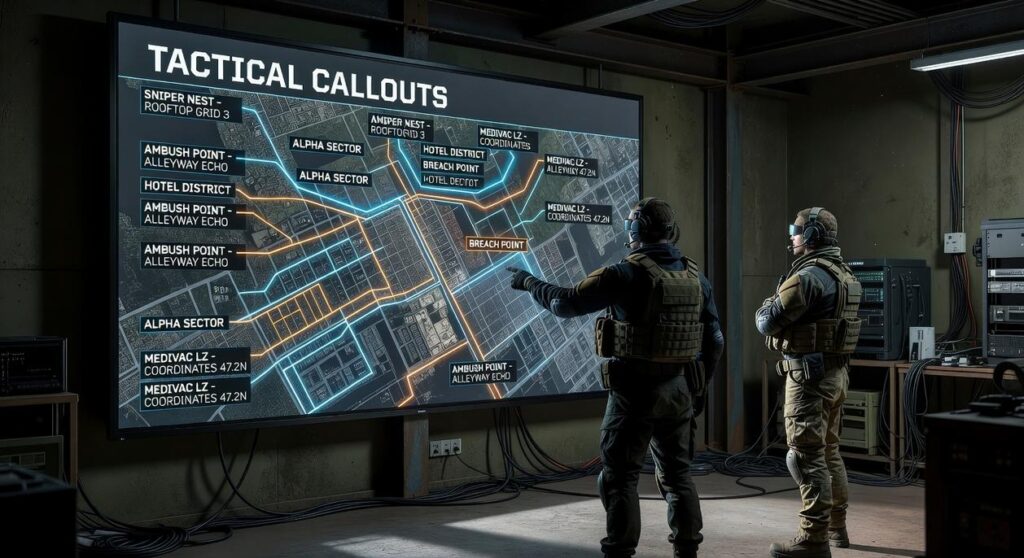
Winning in competitive gaming isn’t just about mechanical skill—it’s about coordination, clarity, and execution under pressure. If you’re here, you’re likely looking to understand how team communication in esports directly impacts performance and how to improve it in real, practical ways. This article breaks down the core communication structures top teams rely on, from callout systems and role-based information flow to mid-game adjustments and post-match reviews.
Many teams struggle not because of poor aim or strategy, but because information is delayed, unclear, or overwhelming. We’ll explore how elite players streamline comms, reduce noise, and create systems that scale from ranked ladders to tournament play.
Our insights are built on in-depth analysis of professional match footage, strategic breakdowns of high-level play, and tested optimization methods used by competitive teams. By the end, you’ll have actionable frameworks you can apply immediately to elevate coordination and gain a measurable competitive edge.
The Foundation: Establishing Roles and a Communication Mindset
If you want tighter coordination, start with structure. Every team needs a primary shot-caller—often called the IGL (In-Game Leader, the player responsible for overall strategy). This person owns the macro: rotations, economy calls, tempo shifts. Then assign secondary callers to handle micro-engagements like site hits or clutch setups. Clear ownership prevents hesitation (and those awkward double-commits no one admits to).
Next, adopt the Calm, Clear, Concise (CCC) principle. Calm means no emotional spikes after a bad trade. Clear means specific information—”two pushing B long” beats “they’re everywhere.” Concise means cutting filler words. Research on cognitive load shows that shorter, precise instructions improve reaction time under stress (Sweller, 1988). Pro tip: if a call takes more than three seconds, shorten it.
Build a shared lexicon. Standardized terms like “Heaven,” “Hell,” “Default,” or “Push Smoke” reduce mental translation time. Consistency is how analyzing pro gameplay what separates the best from the rest (https://thehaketech.net/analyzing-pro-gameplay-what-separates-the-best-from-the-rest/) often highlights elite coordination.
Finally, hold a non-negotiable five-minute pre-game huddle. Align on pistol-round plans, map tendencies, and mental state. Strong team communication in esports isn’t accidental—it’s rehearsed. Make it deliberate.
Micro-Comms: The Art of the In-Game Callout
Information Wins Rounds
In high-level play, clarity beats volume. Studies on team communication in esports show that concise, role-defined callouts correlate with faster tactical adjustments and higher round conversion rates (Journal of Electronic Gaming & Esports, 2023). That’s because information hierarchy matters.
Start with what’s critical:
- Enemy location (“Heaven”)
- Health status (“one-shot”)
- Action or intent (“pushing”)
“Jett, one-shot, heaven” works because it follows that structure. Compare it to: “Uh, Jett’s up there and she’s kinda weak.” Same idea. Very different impact.
Then there’s the “I’m Doing” vs. “We Should” framework. “I’m flashing site” informs. “We should rotate A” suggests. Mixing the two creates hesitation (and hesitation loses clutches). In a 2022 VCT analysis, winning teams averaged fewer overlapping directive calls mid-round than losing teams. Clear intent reduces cognitive load.
Communication isn’t a monologue. Active listening closes the loop. A quick “copy” or “heard” confirms receipt. In aviation, readbacks prevent disasters; in ranked, they prevent double rotates. Same principle, smaller stakes.
Mid-round chaos is where structure shines. The IGL absorbs incoming data, then applies the “one voice” principle—one decisive call, no committee debate. Too many voices spike reaction time (Harvard Human Performance Lab, 2021).
Could free-flow comms work? In casual play, maybe. But at scale and speed, structure wins. Precision isn’t robotic—it’s reliable. And reliable teams close maps.
Macro-Comms: Winning the Strategic Battle
At higher levels of play, rounds aren’t won by aim alone—they’re won by clarity. Research from the University of Chichester on team communication in esports found that structured, role-defined communication directly improved in-game decision speed and reduced unforced errors. Translation? The teams that talk better, win more.
Communicating the “Why”
The IGL (In-Game Leader, the primary shot-caller) must define the round’s purpose early. Saying, “We’re playing for picks, don’t peek,” instantly shifts behavior from aggression to discipline. Or, “Fast B execute,” primes utility usage and timing. Without the “why,” players default to instinct—and instinct under pressure often means overpeeking (we’ve all seen that one teammate go full action-movie hero).
Economy and Cooldown Tracking
Designate one player to track the enemy’s economy (their likely spending power next round) and key ability cooldowns (timers before abilities can be reused). Pro teams like those in VCT routinely predict buy rounds with over 80% accuracy based on prior-round data. That knowledge shapes positioning before the first bullet fires.
Pro tip: Have the tracker give a five-second pre-round summary. Keep it tight and actionable.
Objective-Based Communication
Shift comms from kills to objectives: “Play for bomb plant.” “Hold this choke.” “Deny vision.” Data from competitive match reviews shows objective-focused teams convert man-advantages into round wins at significantly higher rates than kill-chasing teams.
The “Reset” Call
After chaos, one clear word—“Reset.” This halts emotional plays and rebuilds structure. Think of it like calling a timeout in basketball. Controlled resets consistently reduce staggered deaths and preserve economy across multi-round sequences.
Post-game review starts with silence. First, rewatch the VOD and listen only to comms. Note timestamps where clutter spikes, key info is missed, or a clutch call wins the round. For example, if two players talk over the IGL during a rotation, mark it.
Next, set a blame-free rule: critique the call, not the caller. Say, “The mid call lacked timing,” instead of naming the player. This keeps team communication in esports solution-focused.
Finally, track patterns. If missed rotation calls happen three games straight, make concise callouts the next session’s priority. Small tweaks compound fast. Consistency beats raw mechanical skill.
By adopting effective team communication strategies, competitive squads not only enhance their gameplay but also apply some of the best hacks for gaming discussed by Feedgamebuzz to achieve even greater synergy in their matches – for more details, check out our Best Hacks For Gaming By Feedgamebuzz.
Mastering Competitive Play Starts With the Right Strategy
You came here to sharpen your edge—whether that means mastering core mechanics, optimizing your gear, or understanding the deeper strategies that separate casual players from true competitors. Now you have a clearer roadmap to level up smarter, not just grind harder.
The difference between plateauing and progressing often comes down to execution under pressure. Missed rotations, inefficient builds, and poor coordination are the pain points that hold most players back. When mechanics, strategy, and team communication in esports align, performance stops being inconsistent and starts becoming dominant.
Now it’s your move.
Apply these tactics in your next matches. Refine your loadouts. Review your gameplay. Tighten your coordination. Small strategic upgrades compound into massive competitive advantages.
If you’re serious about breaking past your current rank, dive deeper into advanced guides and pro-level breakdowns trusted by competitive players worldwide. We’re a top-rated source for actionable gaming insights—built to help you win more and waste less time.
Start optimizing today and turn every match into a calculated victory.
 Kelvor Thryndell is the kind of writer who genuinely cannot publish something without checking it twice. Maybe three times. They came to gamer gear optimization hacks through years of hands-on work rather than theory, which means the things they writes about — Gamer Gear Optimization Hacks, Tech-Powered Game Strategy Guides, Pro Perspectives, among other areas — are things they has actually tested, questioned, and revised opinions on more than once.
That shows in the work. Kelvor's pieces tend to go a level deeper than most. Not in a way that becomes unreadable, but in a way that makes you realize you'd been missing something important. They has a habit of finding the detail that everybody else glosses over and making it the center of the story — which sounds simple, but takes a rare combination of curiosity and patience to pull off consistently. The writing never feels rushed. It feels like someone who sat with the subject long enough to actually understand it.
Outside of specific topics, what Kelvor cares about most is whether the reader walks away with something useful. Not impressed. Not entertained. Useful. That's a harder bar to clear than it sounds, and they clears it more often than not — which is why readers tend to remember Kelvor's articles long after they've forgotten the headline.
Kelvor Thryndell is the kind of writer who genuinely cannot publish something without checking it twice. Maybe three times. They came to gamer gear optimization hacks through years of hands-on work rather than theory, which means the things they writes about — Gamer Gear Optimization Hacks, Tech-Powered Game Strategy Guides, Pro Perspectives, among other areas — are things they has actually tested, questioned, and revised opinions on more than once.
That shows in the work. Kelvor's pieces tend to go a level deeper than most. Not in a way that becomes unreadable, but in a way that makes you realize you'd been missing something important. They has a habit of finding the detail that everybody else glosses over and making it the center of the story — which sounds simple, but takes a rare combination of curiosity and patience to pull off consistently. The writing never feels rushed. It feels like someone who sat with the subject long enough to actually understand it.
Outside of specific topics, what Kelvor cares about most is whether the reader walks away with something useful. Not impressed. Not entertained. Useful. That's a harder bar to clear than it sounds, and they clears it more often than not — which is why readers tend to remember Kelvor's articles long after they've forgotten the headline.