

If you’re here, you’re looking to understand how great games are built from the ground up—specifically how smart structure, pacing, and player flow come together to create unforgettable experiences. This article breaks down the essential level design principles that shape everything from difficulty curves to environmental storytelling, helping you see what separates average maps from truly immersive worlds.
We’ll explore how layout influences player behavior, how progression systems maintain engagement, and how designers balance challenge with reward. Whether you’re an aspiring designer, a modder refining your craft, or a competitive player who wants deeper insight into game structure, you’ll find clear, actionable explanations you can apply immediately.
Our insights are grounded in hands-on analysis of modern and classic titles, practical design breakdowns, and tested gameplay strategies—so you’re not just getting theory, but proven techniques used in real gaming environments.
From Empty Space to Unforgettable Experience
To master the art of level design and ensure a smooth player flow, it’s equally important to stay informed about the latest trends and innovations in the industry, which you can explore in our article on how to keep up with gaming news at Thehaketech – for more details, check out our How to Keep up with Gaming News Thehaketech.
Every gamer remembers a masterpiece—the vertical sprawl of Lordran, the suffocating corridors of the USG Ishimura. That magic isn’t luck; it’s built on deliberate level design principles that transform empty space into emotion.
The gap between concept art and a playable environment feels massive (and yes, a little terrifying). Many designers stall because they lack structure.
Focus on core pillars:
- Flow: guide movement without obvious barriers.
- Pacing: alternate tension and relief.
- Landmarks: anchor memory and navigation.
These features aren’t decorative—they reduce confusion, heighten immersion, and turn ideas into experiences players never forget.
Mastering the Player’s Journey: Pacing and Flow
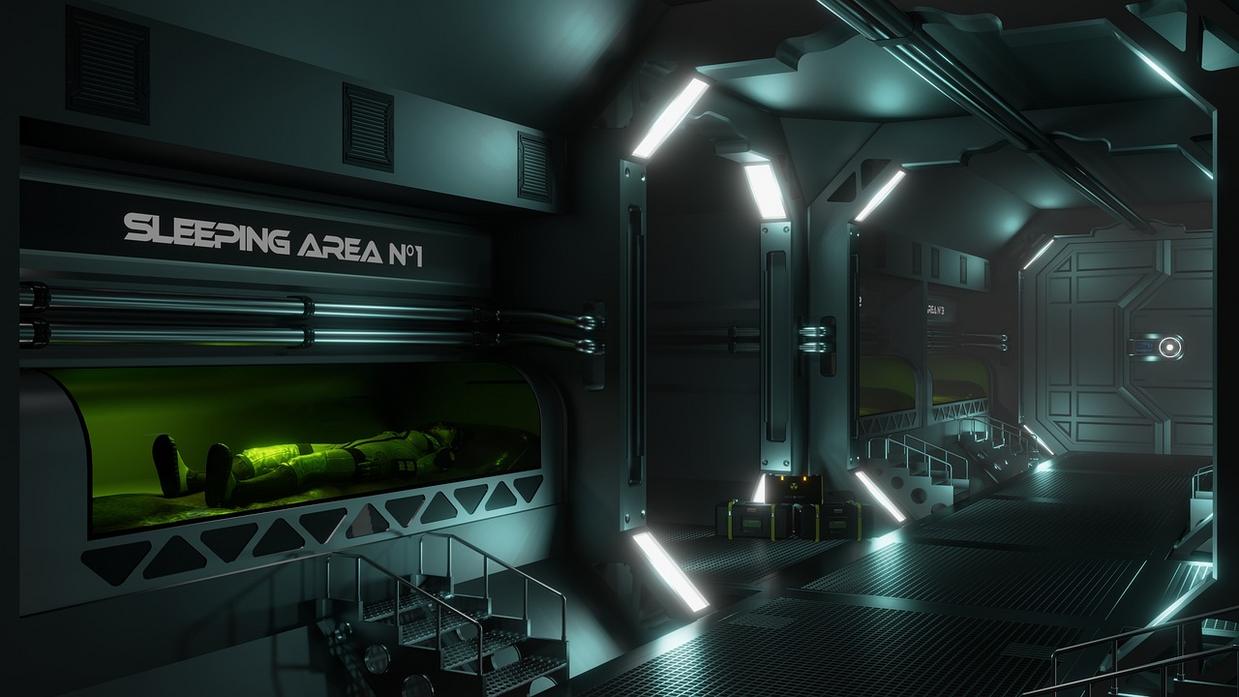
Defining Flow State
Psychologist Mihaly Csikszentmihalyi defined flow as the mental state where challenge and skill are perfectly balanced, producing deep focus and intrinsic motivation. In games, this is the sweet spot—too easy breeds boredom, too hard sparks frustration. A 2020 study in Computers in Human Behavior found players report significantly higher enjoyment and retention when difficulty scales with skill. Think of Dark Souls: punishing, yes—but fair (most of the time). That balance is deliberate.
The Anatomy of Pacing
Great levels rely on gameplay “beats”—intentional shifts between tension, exploration, combat, and rest. Neuroscience research shows alternating stress and relief improves engagement and memory retention. Consider this simplified rhythm:
| Beat Type | Player Emotion | Purpose |
|---|---|---|
| Combat | Tension |
Test skill |
| Exploration | Curiosity | Discovery |
| Respite | Relief | Reset focus |
This cadence reflects core level design principles that sustain momentum without exhaustion.
Critical Path vs. Exploration
A clear critical path prevents confusion, while optional routes reward curiosity with loot or lore. The Last of Us uses lighting and environmental framing to guide players subtly—proof that direction doesn’t require hand-holding.
Using “Denial and Reward”
Showing unreachable treasure creates desire. When players later unlock it, dopamine spikes (as confirmed by reward anticipation studies in Neuron, 2014). Denial fuels motivation; reward seals satisfaction.
Guiding the Eye: Visual Language and Environmental Storytelling
Great spaces don’t shout directions—they whisper them. In games, that whisper often starts with Landmarks and “Weenies”: large, visually distinct structures that pull players forward. Think of a glowing tower on the horizon (A) versus a flat skyline with identical rooftops (B). A gives orientation and purpose; B gives confusion. Disney popularized the term “weenie” for attractions you can see from afar—games use the same trick to anchor movement.
Lighting sharpens that pull. A brightly lit doorway against a dark corridor signals safety or progress, while flickering red light hints at danger. Compare a quest item bathed in warm light (A) to one hidden in visual noise (B). Players gravitate to clarity. Pro tip: increase contrast, not just brightness—our eyes notice differences more than raw luminance (Ware, Information Visualization, 2012).
Composition matters just as much. Using leading lines, arches, and the rule of thirds frames objectives naturally. A staircase centered with converging rails (A) guides instinctively; a cluttered, off-angle layout (B) stalls momentum. These level design principles ensure architecture feels intentional rather than accidental.
Finally, show—don’t tell. Environmental storytelling uses object placement to imply narrative: an overturned chair, a cold fireplace, claw marks on a door. Compare a text-heavy exposition dump (A) with a silent, detail-rich room (B). The latter invites curiosity. For deeper systemic context, see ai behavior systems how npc mechanics shape gameplay.
Have you ever wondered why some levels feel perfectly tense while others feel unfair?
Great challenge design follows a simple loop: teach, test, twist. First, you teach a mechanic in a safe space where failure carries little cost (think of Portal’s early chambers). Then you test that knowledge under mild pressure. Finally, you twist it by combining mechanics or shifting context.
Use level design principles in the section once exactly as it is given.
As mastery grows, so should the difficulty curve. In other words, gradually raise complexity to avoid sudden spikes or boring lulls (lulls are creativity killers). According to cognitive load theory, players learn best when new information builds on prior knowledge (Sweller, 1988). So why sabotage that flow with chaos?
Meaningful risk versus reward matters just as much. Would you fight a brutal miniboss for a cosmetic trinket? Probably not. Players engage difficult encounters only when the payoff matches the peril.
Moreover, strategic encounter design turns enemies and hazards into tactical puzzles rather than random obstacles. Place threats to encourage movement, resource management, and environmental awareness.
After all, challenge is a conversation between designer and player. Are you asking them to grow, or just to endure? Craft with intention, and they will rise to meet you. Balance ambition with clarity, and your levels will feel demanding yet fair every single time always.
Start With a Playable Blueprint
Before art, lighting, or story, you need numbers. Establishing player metrics means defining the character’s core abilities—jump height, run speed, slide distance—before building anything. In other words, the world must fit the player, not the other way around. If your hero jumps three meters, every platform, gap, and ceiling is scaled to that value. Think of it like setting gravity in a physics experiment (because, essentially, you are).
Next comes grayboxing. This is the practice of constructing a level using simple, untextured shapes to test layout, flow, and scale. No polish. No decoration. Just space and movement. By stripping visuals away, you clarify what actually works.
Finally, rely on iteration:
- Build a rough version.
- Playtest it.
- Gather feedback and adjust.
These level design principles ensure clarity, balance, and momentum through repetition and refinement over time with disciplined, focused creative effort and patience.
Building worlds that stick with players isn’t magic, although sometimes it feels like it. At first, the sheer complexity can be overwhelming. However, when you focus on flow, visual guidance, challenge design, and the blueprinting process, things start to click. I won’t pretend there’s a perfect formula—design debates rage on in forums daily—but mastering level design principles gives you a reliable compass. In other words, complexity becomes craft. So open your editor. Graybox a single room. Test one idea. Iterate. Adjust. Repeat. That’s how intimidating ambition turns into playable reality (yes, even masterpieces start as gray cubes). Start small today.
Mastering Core Mechanics and Smarter Play Starts Now
You came here to better understand how core systems, smart strategy, and level design principles shape your performance—and now you have the blueprint. From optimizing your gear to refining your approach to combat, exploration, and progression, you’ve seen how small mechanical improvements translate into consistent wins.
The real frustration isn’t losing—it’s not knowing why you’re losing. When mechanics feel unclear or progression stalls, the game stops being fun. By applying what you’ve learned here, you remove that guesswork and start playing with purpose, precision, and confidence.
Now it’s time to act. Put these strategies into practice, refine your builds, experiment with smarter routing, and revisit challenging sections with a systems-first mindset. If you want deeper breakdowns, advanced modding tutorials, and pro-level optimization guides trusted by serious players, explore our latest resources and start upgrading your gameplay today. Your next level-up isn’t luck—it’s strategy. Act on it now.
 William Ryanievada writes the kind of hot topics in gaming content that people actually send to each other. Not because it's flashy or controversial, but because it's the sort of thing where you read it and immediately think of three people who need to see it. William has a talent for identifying the questions that a lot of people have but haven't quite figured out how to articulate yet — and then answering them properly.
They covers a lot of ground: Hot Topics in Gaming, Gamer Gear Optimization Hacks, Core Gaming Mechanics and Insights, and plenty of adjacent territory that doesn't always get treated with the same seriousness. The consistency across all of it is a certain kind of respect for the reader. William doesn't assume people are stupid, and they doesn't assume they know everything either. They writes for someone who is genuinely trying to figure something out — because that's usually who's actually reading. That assumption shapes everything from how they structures an explanation to how much background they includes before getting to the point.
Beyond the practical stuff, there's something in William's writing that reflects a real investment in the subject — not performed enthusiasm, but the kind of sustained interest that produces insight over time. They has been paying attention to hot topics in gaming long enough that they notices things a more casual observer would miss. That depth shows up in the work in ways that are hard to fake.
William Ryanievada writes the kind of hot topics in gaming content that people actually send to each other. Not because it's flashy or controversial, but because it's the sort of thing where you read it and immediately think of three people who need to see it. William has a talent for identifying the questions that a lot of people have but haven't quite figured out how to articulate yet — and then answering them properly.
They covers a lot of ground: Hot Topics in Gaming, Gamer Gear Optimization Hacks, Core Gaming Mechanics and Insights, and plenty of adjacent territory that doesn't always get treated with the same seriousness. The consistency across all of it is a certain kind of respect for the reader. William doesn't assume people are stupid, and they doesn't assume they know everything either. They writes for someone who is genuinely trying to figure something out — because that's usually who's actually reading. That assumption shapes everything from how they structures an explanation to how much background they includes before getting to the point.
Beyond the practical stuff, there's something in William's writing that reflects a real investment in the subject — not performed enthusiasm, but the kind of sustained interest that produces insight over time. They has been paying attention to hot topics in gaming long enough that they notices things a more casual observer would miss. That depth shows up in the work in ways that are hard to fake.